FIFA World Cup 2026 on ČT sport
One of the year's biggest broadcast projects, handled solo: extending the tournament identity for Czech television, a social campaign for our commentators, and a studio that had to look much bigger than it is.
- Client
- ČT sport
- Year
- 2026
- My role
- Art direction, design, motion, 3D, studio design, graphics workflow
- Tools
- Blender, After Effects
Ident
The official tournament identity was a pleasure to work with — flexible and open to playful animation, so full credit to the people behind it. My job was to carry it into the Czech broadcast context and design everything our channel needed on top of it.
Final work
Making of
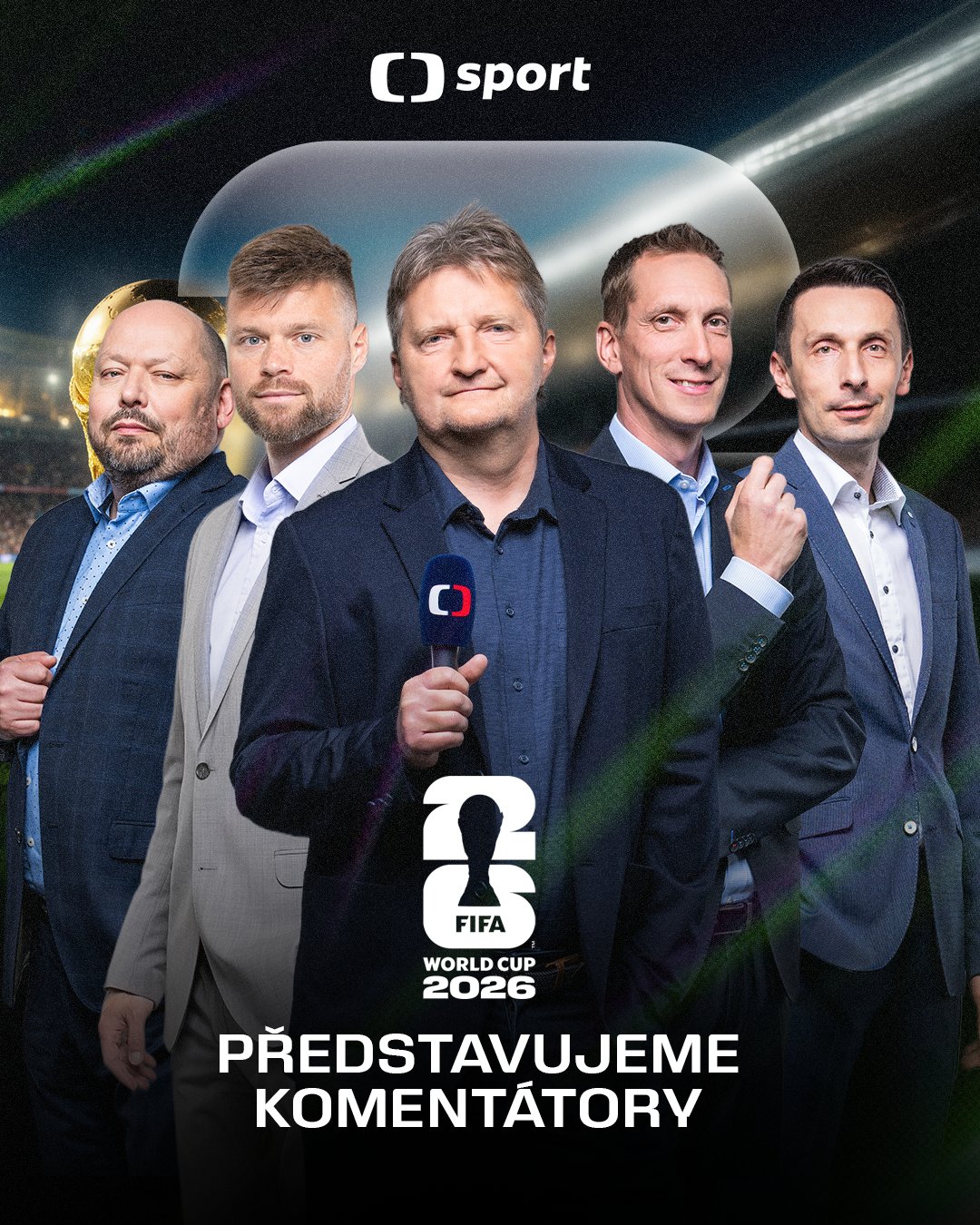
Commentators campaign
Shortly before kick-off, the social media team shared their draft posts introducing our commentators. They were solid but flat, at the exact moment the whole country was gearing up for the tournament — and they were meant to be our main social hook for it.
I stopped them and set up a new photoshoot of all commentators with a photographer. Then I designed a new version and built it as a complete template set covering every variant.
Once the posts went live, they drew strong engagement, and every commentator reposted them on their own channels.
Making of
Final work

A small studio, extended into virtual space
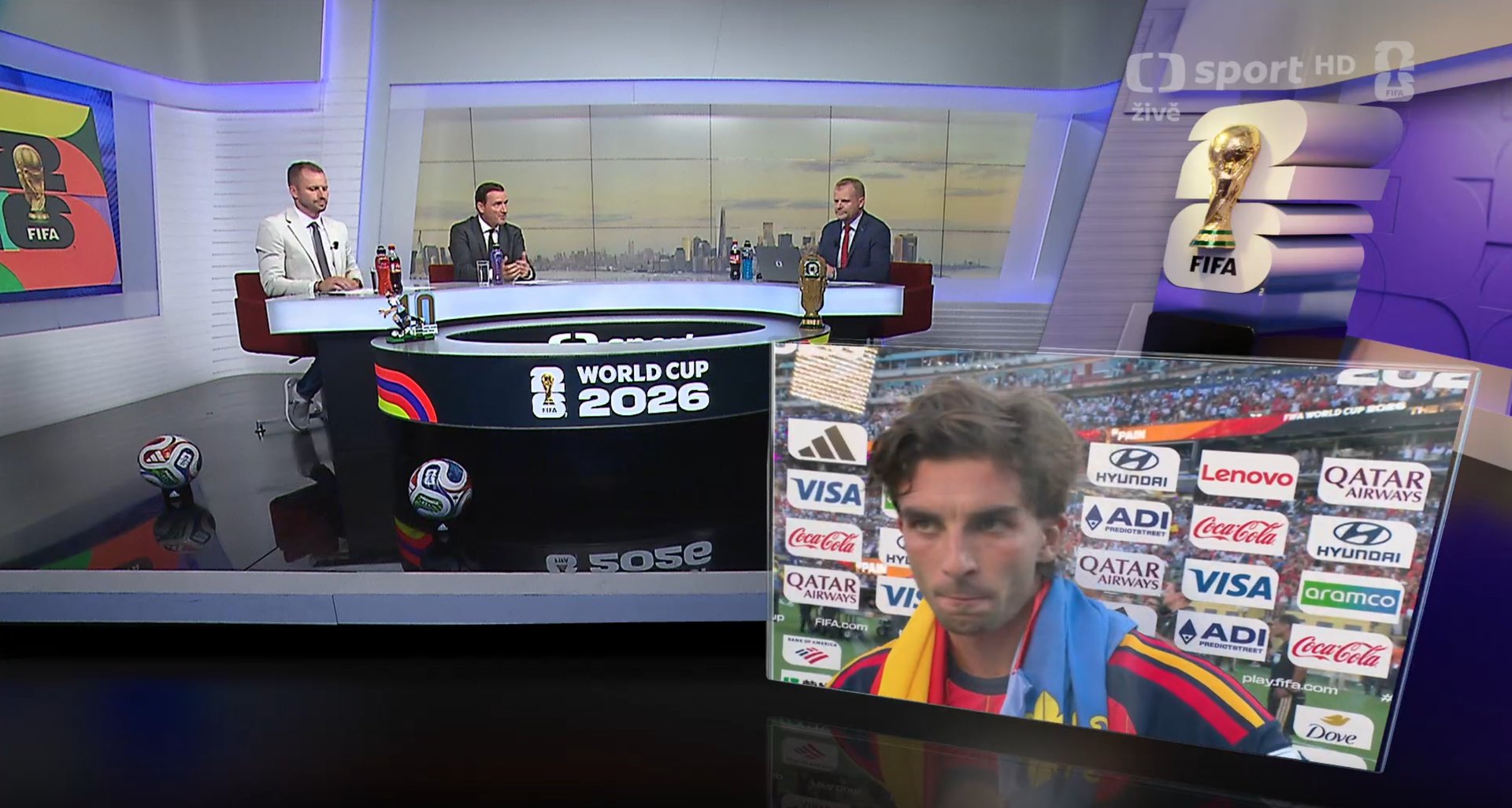
Management wanted the World Cup to stand out, and the directors asked for a different studio. A temporary set outside our usual studio was on the table, but night broadcasting and budget ruled it out. We stayed in SK7 — small and old.
Its chronic problem is size, so I proposed extending it virtually: a real core with guests, desk and set, and everything around it in 3D. All it needed was a set of rented tracked cameras. The proposal was approved. I designed a set with a view into a stadium and multiple display surfaces, and previsualised the camera work in Blender, so the director could see exactly how a tracked crane camera would glide from the graphics to the guests.
Plan B, still something new
Then the budget lost the tracked cameras too. I cut the concept down to what works with static cameras and kept its strongest idea: a reverse shot.
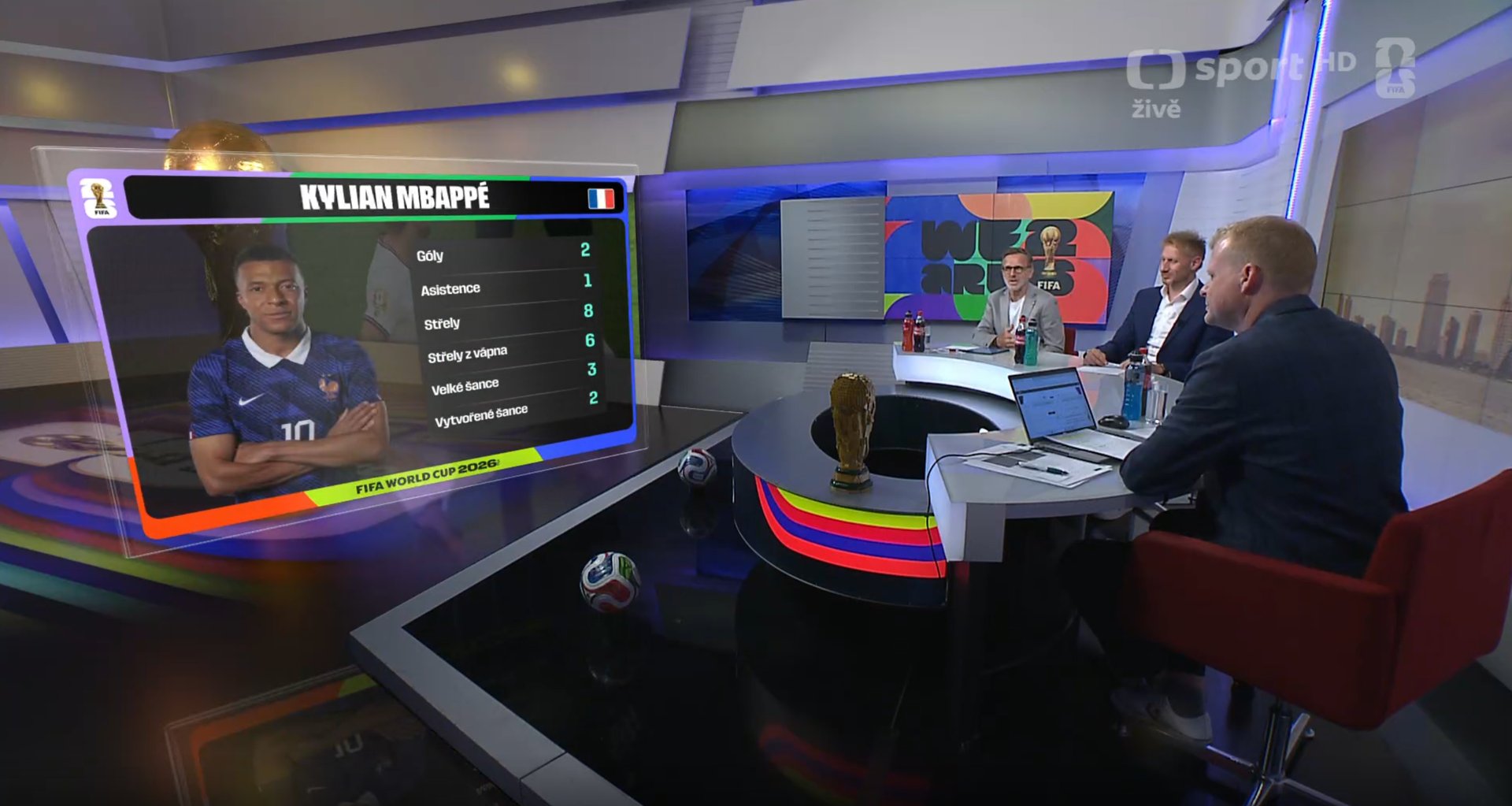
The right side of the studio was covered with a virtual layer that hides a real camera shooting the reverse angle — part of the presenters and a studio virtually deepened behind them. That is where all the graphics live.
From match data to on-air in a few clicks
The last piece was a workflow that takes OPTA match data and, in a few clicks, turns it into on-air graphics in the World Cup brand, placed inside the virtual studio.
Have a project in mind?
hello@jiribystricky.com